















hero
animate-intro
Copilot in Edge
What starts here, gets done here
what-columns

Get more done, faster
Planning a trip or researching a big purchase? Copilot compares, summarizes, and handles the tasks you don’t want to do — all in one place.

AI that works alongside you
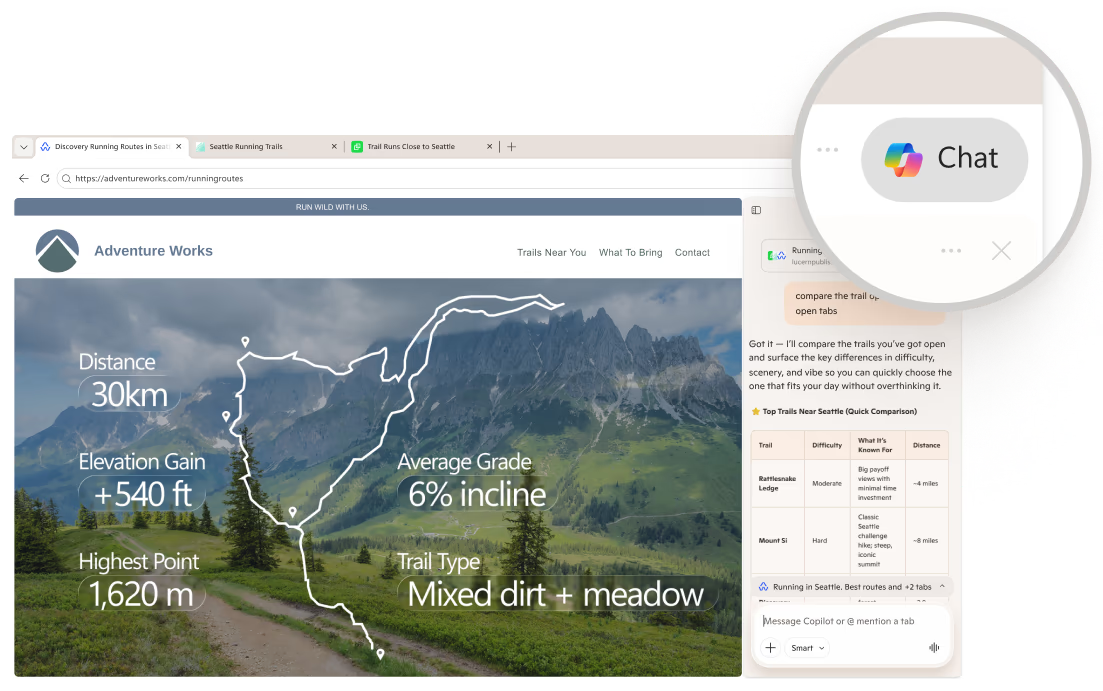
Copilot works in your browser, using your tabs to compare options, surface key details, and give clear answers — no jumping between tools.

Gets better the more you use it
Copilot remembers what you’ve worked on, so you don’t start over. The more you use it, the more helpful and personalized it becomes.
side-pane-test
It starts with one click.
No more tab-hopping. Copilot is built into Edge — click icon in the top right of your window to summarize, compare, or get answers without leaving the page.
one-place-to-search
One place to search, chat, and browse
trio
Copilot new tab page
The new tab page, upgraded
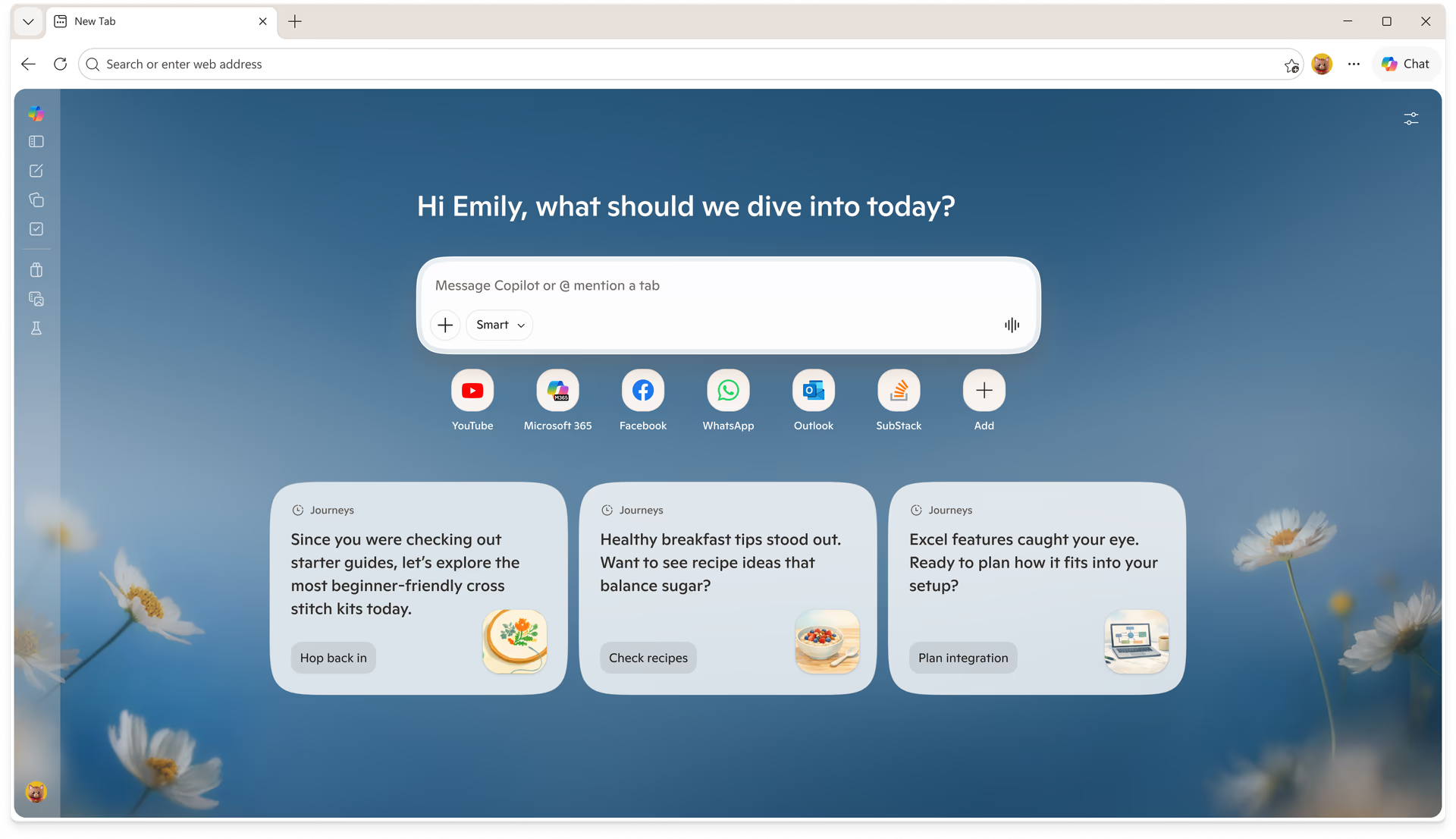
Open a Copilot new tab and type anything — a question, a search, or a website. Copilot routes you instantly to the right place, so you can start faster.
Skip the back and forth. Move from chat to search to browsing in one smooth flow, with everything you need right there when you open a tab. Turn on the Copilot new tab page and try it.
Journeys
Pick up where you left off
Copilot groups your browsing into journeys — related pages, searches, and chats. Revisit what matters, go deeper, and jump back in with one click.
Turn on Journeys to organize your browsing, then find them anytime on your new tab page.
Browse with Copilot
Your tasks, handled by Copilot
Booking a trip, making a reservation, or sending a gift? Copilot can take action for you — no need to jump between sites or handle every step.
Open a Copilot new tab or click the Copilot icon in the top right and say what you need. Copilot searches, compares, fills in forms, and helps complete tasks — with your approval before anything is finalized.
vision
shopping-alt
Shop smarter with Copilot
Copilot helps you compare products, research value, and find better deals — all without leaving the page.
Ask questions, get suggestions, and make your most confident buying decision.
How it works

Ask Copilot to help you find a product or compare prices

Review deals and summaries to buy with confidence
gradient
feature-cards
Experience the full power of Copilot
Discover how Copilot helps you browse smarter and do more with Microsoft Edge.
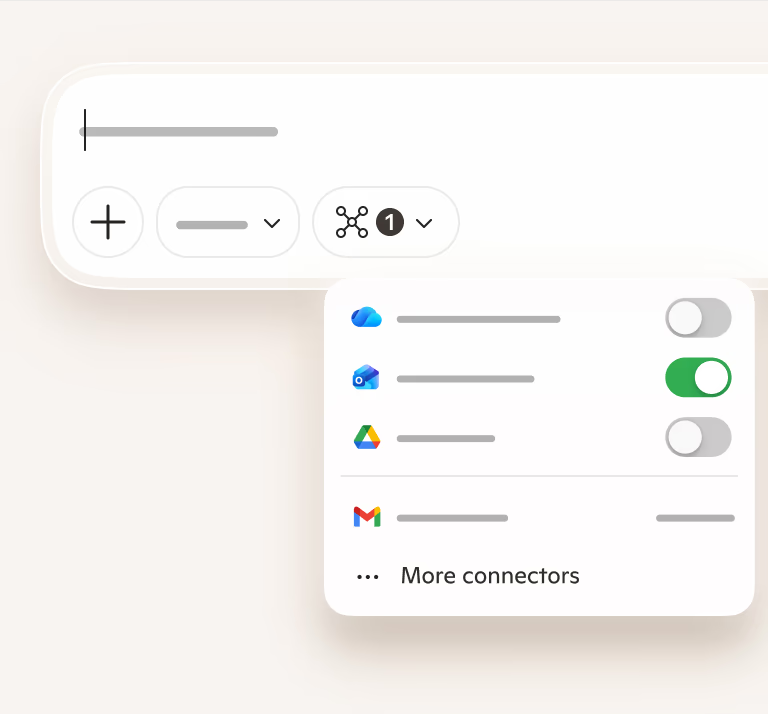
Copilot connectors
Stop switching apps to find things
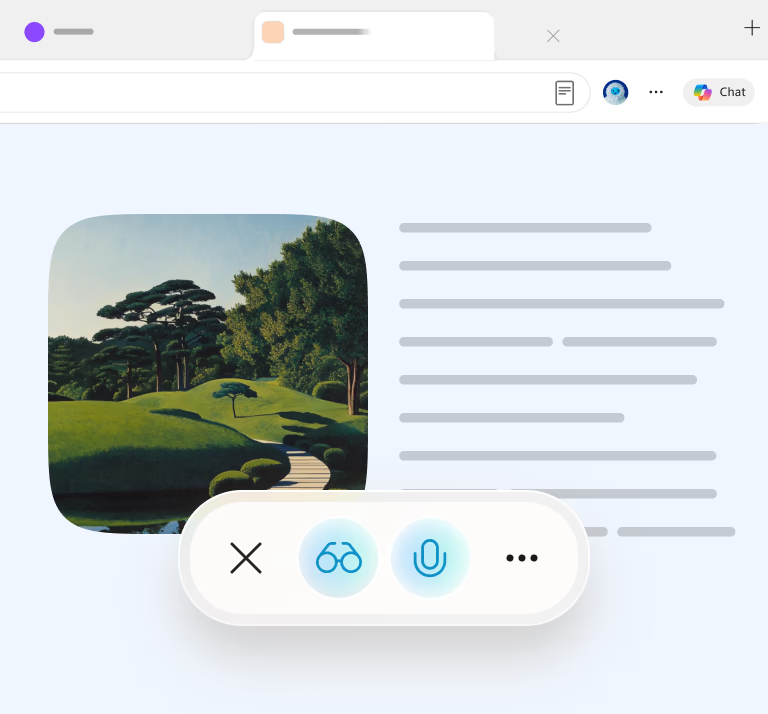
Reading mode
Read without distractions
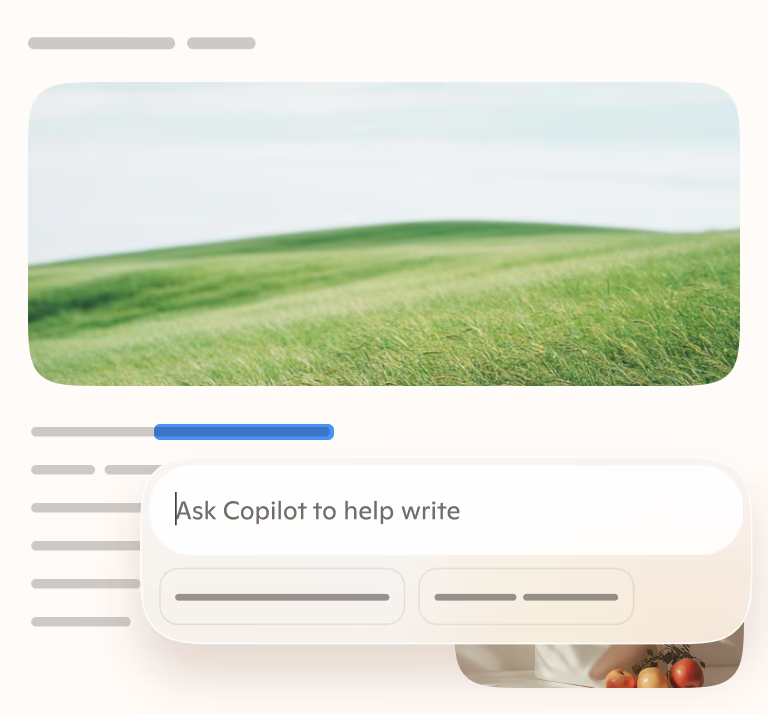
Writing assistance
Turn ideas into clear drafts
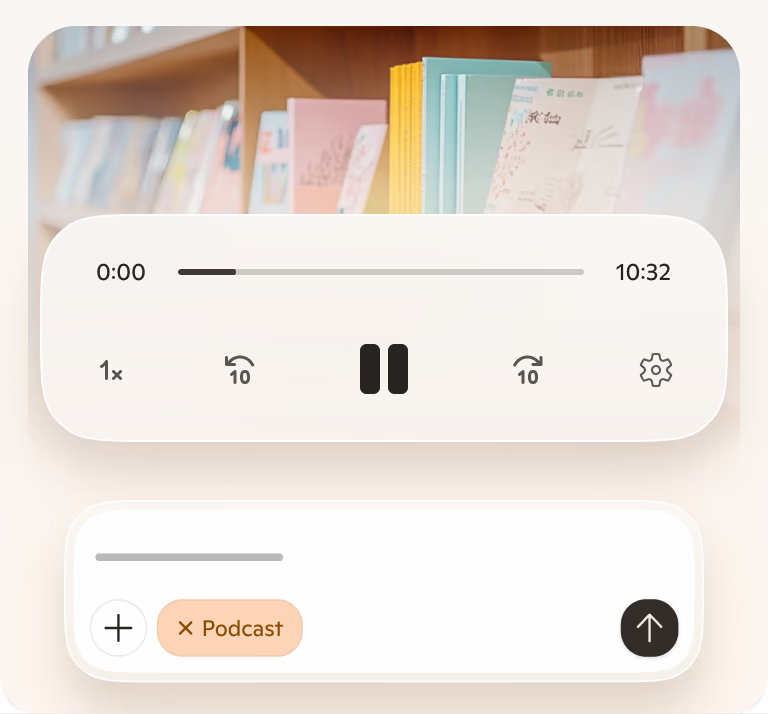
Copilot Podcasts
Turn anything into audio

Compare across tabs
See what matters across pages
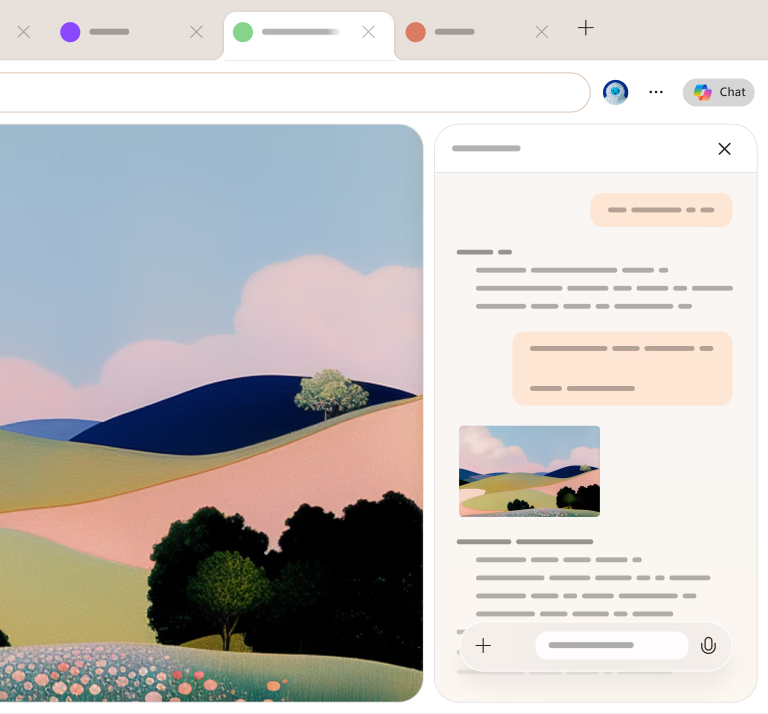
Summarize any page
Get the gist instantly
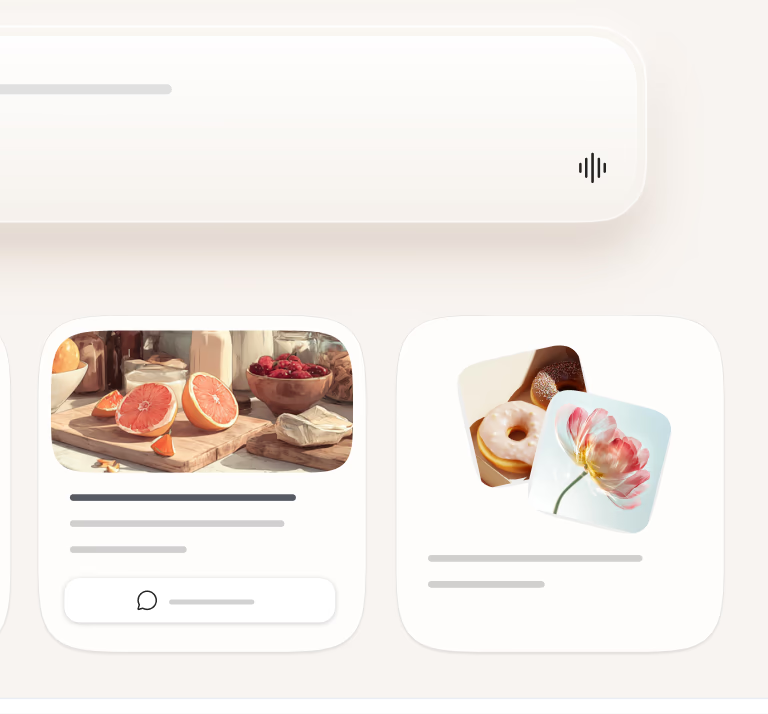
Copilot Memory
Adapts to how you work
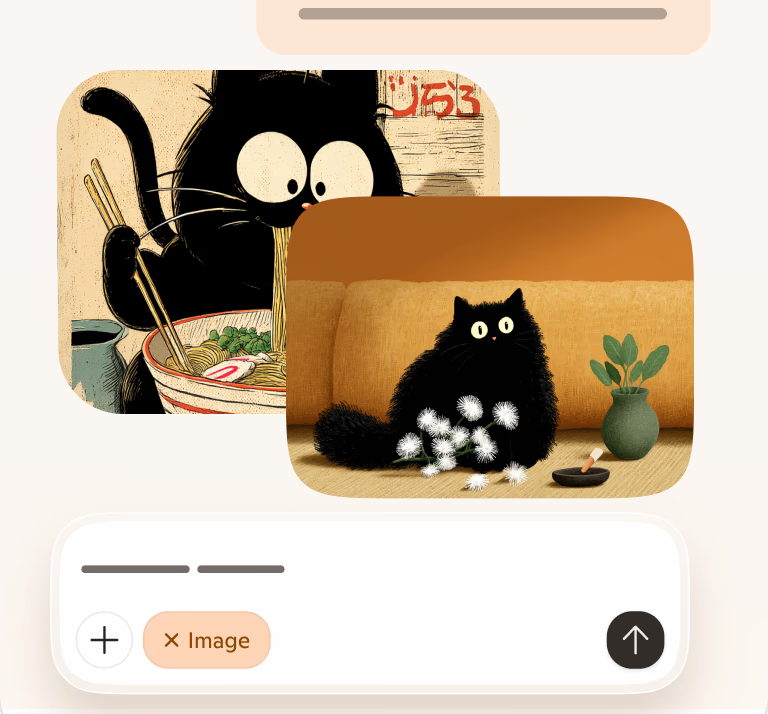
Image Creator
Turn ideas into images
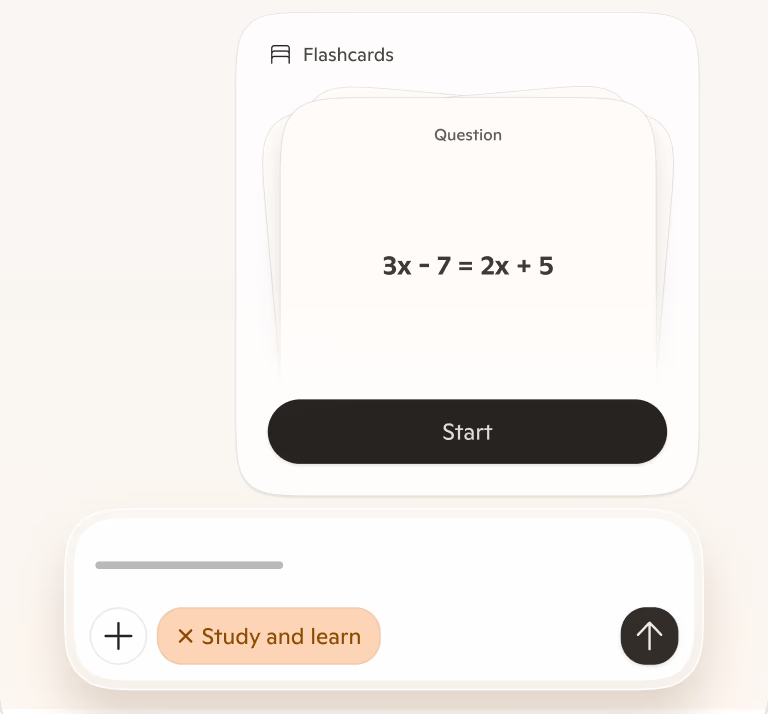
Study and learn
Learn as you go
mobile
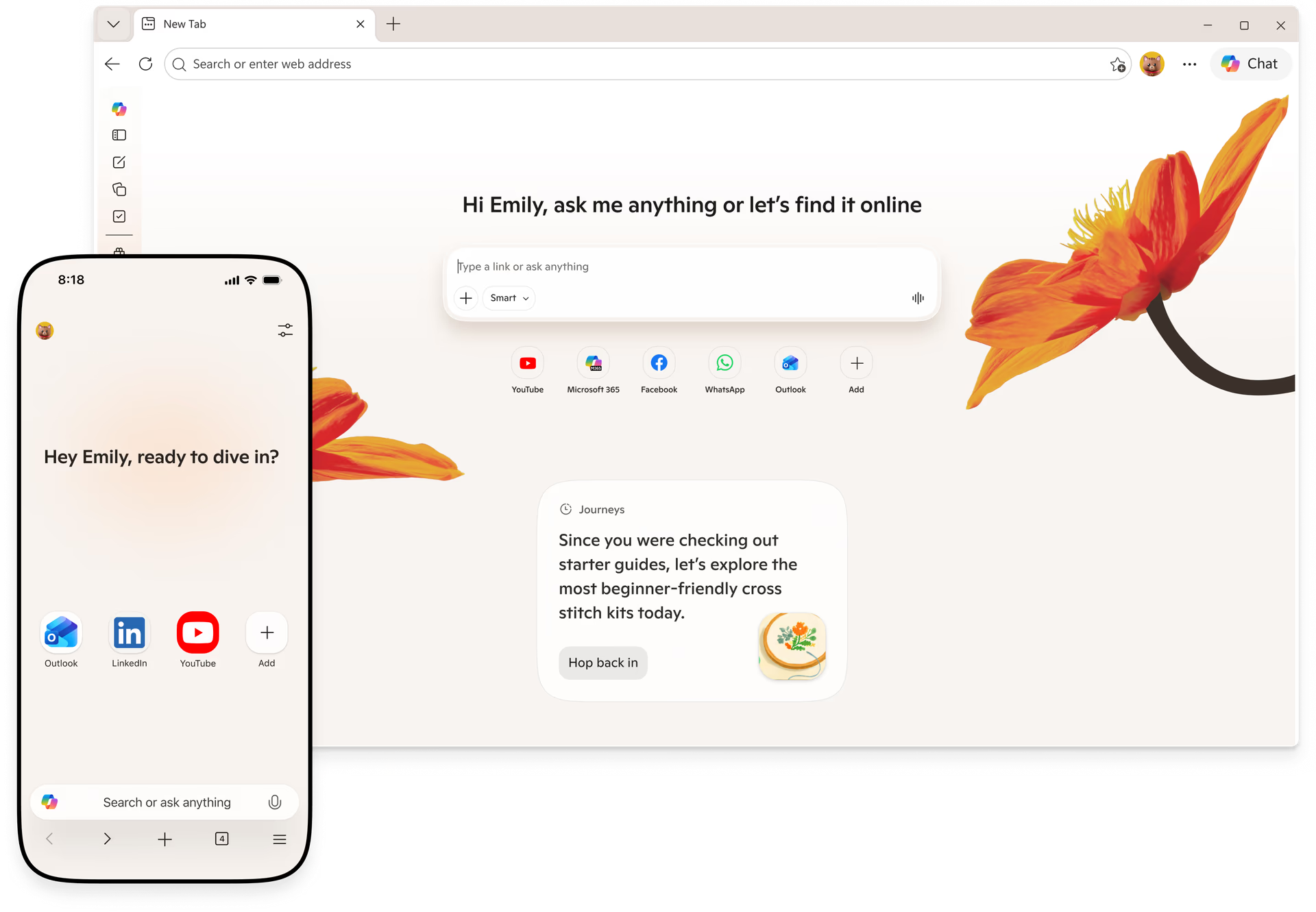
Copilot in Edge, wherever you go
Smarter help is built right into Edge on your phone.
Scan to get the Edge mobile app
prompt-builder
floral-group
in-control
Your web, your control
Copilot in Edge works with you, on your terms. It helps when you ask, so you stay in control.

Control your experience
Choose which features to use, and switch them on or off whenever you want. You’re always in control of your experience.

Manage with ease
Update permissions, clear history, and adjust settings in just a few steps. Control how Copilot works, all in one place.

Privacy on your terms
Optional features like context clues, video highlights, and memory are always up to you. Your data stays private and follows Microsoft’s trusted standards.
discord-banner

Shape the future of smarter browsing together.
Join our Discord community to share feedback, connect with others, and help define the future of browsing.
faqs
header
Frequently Asked Questions
get-the-most-out-of-copilot
Get the most out of Copilot
Get the most out of Copilot
Microsoft Copilot is an AI-powered digital assistant designed to engage in conversations and help people with a range of tasks and activities on their devices. Copilot can answer questions, create images or drafts of written content, suggest different ways to word things you've written, and much more.
Copilot is like having a research assistant, personal planner, and creative partner at your side. With Copilot you can:
- Ask a question, explore a curiosity, or practice a conversation. When you ask complex questions, Copilot gives you detailed replies. Feel free to ask follow-ups, such as “can you explain that more simply?” or “please give me more options.”
- Get a real answer. Copilot looks at search results across the web to offer you a summarized response and links to its sources.
- Be creative. When you need inspiration, Copilot can help you write poems, stories, or even create a brand-new image. Copilot works best when you’re more descriptive, so get creative and add details like adjectives, locations, or even artistic styles such as ‘digital art’ and ‘photorealistic.’
Each conversation with Copilot will have a limited number of interactions to keep the conversation interesting, relevant, and grounded in search.
Talking to Copilot should feel natural. Type text or speak with your voice — whatever works best for the conversation. Copilot will automatically recognize the language you are using and respond accordingly. You can ask Copilot to speak in another language as well, but it is optimized for English.
As you’re interacting, Copilot can:
- Search the web in a way that feels natural to how you talk, text, or think. Get a single, summarized answer with a consolidated set of links, or a detailed response and sources for more complex questions.
- Ask follow-up questions to your initial question or search to get more helpful replies.
- Rephrase the response and make things easier to understand. Just say something like, “Can you explain that more simply?”
- Respond with different formats like a table or numbered list when you ask for it.
- Help you write poems, stories, speeches, or share ideas for a project.
When you engage Copilot via voice, Microsoft stores voice data in accordance with our data retention policy. Microsoft uses voice conversations and other interactions with Copilot to provide and improve the service as outlined by the Microsoft Privacy Statement. As announced in August, we are also providing our customers with advance notice of training our generative AI models in Copilot on this data, and are providing a clear and easy way to opt out of such training. We are rolling this out gradually to ensure we comply with privacy laws around the world, and are not training on consumer data from the UK, the European Economic Area (EEA), and certain other countries at this time.
You can access Microsoft Copilot at https://copilot.microsoft.com/, Microsoft Copilot Android and iOS apps, Copilot in Windows app, or via Edge by clicking the Copilot icon on the top right. To learn tips for using Copilot in Edge and other AI features in the browser, visit AI tips page.
Visual Search allows you to upload images to Copilot and ask questions about them. For example, you can ask questions about images that are difficult to describe, get a recipe for a dish you don’t know the name of, identify a dog breed you don’t recognize, and much more. To use Visual Search, click on the camera icon in the input bar in Copilot, upload a picture from your device or provide a website link, and ask away.
tell-me-about-responsible-ai
Tell me about Responsible AI
Tell me about Responsible AI
Copilot searches for relevant content across the web and then summarizes the information it finds to generate a helpful response. It also cites its sources, so you’re able to see links to the content it references.
At Microsoft, we take our commitment to responsible AI seriously. Copilot is developed in accordance with our AI principles. We are working with our partner OpenAI to deliver an experience that encourages responsible use, and foundational model work. We've designed the Copilot user experience to keep humans at the center and developed a safety system designed to mitigate failures and avoid misuse with things like content filtering, operational monitoring, abuse detection, and other safeguards. Responsible AI is a journey, and we are continually improving our systems along the way. To learn more about how to use Copilot responsibly, please review our Terms of Use and Code of Conduct.
While Copilot works to avoid sharing unexpected offensive content in search results and has taken steps to prevent Copilot features from engaging with potentially harmful topics, you may still see unexpected results. We’re constantly working to improve our technology to prevent harmful content.
If you encounter harmful or inappropriate content, please provide feedback or report a concern to Copilot by clicking the ‘give feedback’ button in settings or use the flag icon below each response on mobile and the Copilot web page. On the Copilot app, you can long press the response and select “Report.” We will continue to work with people’s feedback to provide a safe search experience.
Copilot aims to respond with reliable sources, but AI can make mistakes, and third-party content on the internet may not always be accurate or reliable. Copilot may misrepresent the information it finds, and you may see responses that sound convincing but are incomplete, inaccurate, or inappropriate. Use your judgment and double check facts before making decisions or taking action based on Copilot’s responses. Reviewing Copilot’s citations is a good place to start checking for accuracy.
To share site feedback or report a concern, select the ‘give feedback’ button in settings or use the flag icon below each response on mobile and the Copilot web page. On the Copilot app, you can also long press the response and select “Report.” We will continue working with people’s feedback to provide a safe search experience for all.
learn-more-about-chat-history
Learn more about chat history
Learn more about chat history
Yes, if you are signed in, the conversations you have with Copilot are saved; We call this “Chat history”. You can view and access each conversation you previously had with Copilot. For example, if you ask Copilot for information about the first person to walk on the moon, the conversation you have will be saved in chat history, which you can return to at any time. By default, we store chat history data for 18 months from the last update to the conversation. You can access and delete your chat history by visiting Home and selecting the time machine icon.
There are two settings available in Copilot Settings to control Copilot data:
- You can turn off AI’s ability to use your data to train models. To do this, go to Sign-in > Settings > Account > Privacy >Model training. You can also go to Privacy > Export/Delete, to delete chat history from account.microsoft.com. Please note, if you are in the European Economic Area (EEA), the UK, and certain other countries Copilot is not using your data to train models currently.
- You can turn off personalization. If you use this setting, you will still have access to chat history and all future chats are saved, but Copilot experiences are not personalized. If you choose to enable the experience, Copilot also uses Bing search history and expressed interest from MSN to create more personalized, fluid conversations. For users in the EEA, the UK, and a limited number of other countries, we are evaluating options before offering this level of personalization for those users. Where offered, Copilot will notify users and provide them with a clear and easy way to opt-out of personalization.
To delete your Copilot chat history, from Settings go to Account > Privacy > Export or delete history, to delete your history from your Microsoft Privacy Dashboard. In addition, in your Microsoft Privacy Dashboard click ‘Browsing and search’ and scroll down to the Search history section. In the search box search for and delete all instances that include “Microsoft Copilot”.
If you are wanting to delete chats from Copilot before 10/01/2004 (legacy experience), in your Microsoft Privacy Dashboard click ‘Browsing and search’, scroll down to the Copilot activity history section and click ‘Clear all Copilot activity history and search history’.
Yes, we keep some of your chat history including prompts, to provide and improve the service. Your prompts are maintained in accordance with our Privacy Statement and used to monitor performance, troubleshoot problems, diagnose bugs, prevent abuse, and other product performance analytics necessary to provide and improve Copilot. Only the data visible in chat history in product is used for personalized answers.
To understand more about Microsoft Privacy Practices, review the Microsoft Privacy Statement and our privacy center.
personalize-your-copilot-experience
Personalize your Copilot experience
Personalize your Copilot experience
If you turn on personalization, we will use your recent conversations and Microsoft activities to personalize your experience. Your Microsoft activities may, depending on your privacy settings, include your Bing search activities, MSN activities, and inferred interests. If you do not want us to personalize using a specific conversation from your chat history, search history or inferred interests, you can delete them on the Microsoft Privacy Dashboard. You can turn off personalization at any time by clicking your account icon at top right corner of the page > account > privacy > personalization. On Edge, you can turn off by clicking on “...”: from Copilot setting menu > permissions and privacy > personalization.
Allowing Copilot personalization means you’re letting Microsoft use your recent conversations and Microsoft activities including your Bing search and MSN activities to make Copilot more personalized for you. Copilot remembers your history and may make inferences from that history about your interests, hobbies, etc., to provide personalized experiences. However, as a Copilot user, you are able to delete all chat messages.
No. The Copilot personalization toggle (available on all Copilot surfaces), controls whether recent conversations and your Microsoft activities are used for personalization. The Edge personalization and advertising toggle controls whether Edge browsing activities can be used across Microsoft surfaces for personalization including Copilot.
You control which chats are used to personalize your experience. If you don’t want Copilot to personalize using your chat history, you can clear Copilot activity history on Microsoft Privacy Dashboard. Once deleted, the chats will not be used to personalize experiences.
Personalization is on by default except for those in the European Economic Area (EEA), the UK, and certain other countries. Users have the option to opt out of the experience. In your conversations, you will be notified whether your experiences are personalized or not. We will display a notice like " Copilot can learn about your interests and personalize your experience.” if personalized experience is allowed. A notice such as “Conversations are used to train AI and Copilot can learn about your interests.” will be displayed when both training and personalization is allowed. Depending on your region, personalization may be available by default. Personalization is not available for unauthenticated users.
We’re following our Responsible AI practices and rolling out this feature slowly; as a result, the feature may not yet be available in the European Economic Area (EEA), the UK, and certain other countries.
You can turn off personalization through the personalization setting in Copilot’s settings menu.
If you change your personalization consent from “yes” to “no,” we will only stop providing a personalized Copilot experience. We will keep your chat history so you can still view your past conversations. However, your future Copilot experience will no longer be personalized.
Yes, you can turn off personalization within Copilot settings at any time. Turning off personalization won’t delete your chat history.
Regardless of your user settings, Copilot is designed not to personalize interactions based on some topics to protect your privacy and to prevent the use of potentially sensitive information. For example, we take steps to exclude context from your past conversations that may be considered sensitive, even if chat history and personalization are turned on in your settings. Users should use caution when sharing information they consider to be sensitive with Copilot.
review-data-use-and-control-options
Review data use and control options
Review data use and control options
Generative AI refers to a category of AI models that analyze data, find patterns and use these patterns to generate or create a new output, such as text, photo, video, code, data, and more. “Training” an AI model means providing it with data to help it learn to make predictions or decisions. Training is a broad concept that includes many different activities to help models learn pre-training a generative AI model, fine tuning a model, or training a classifier or filter to help models provide more appropriate results.
These models use patterns and correlations learned from their training data to predict what comes next in a sequence. They are tuned to learn general relationships in language, not to memorize specific segments of training data. They do not store or have access to the original training data. Instead, generative AI models are designed to generate new expressive works and content. We also take additional steps to prevent these models from inadvertently reproducing their training data, such as conducting testing and building filters that screen out previously published or used material.
Microsoft uses publicly available data, mostly collected from industry-standard machine learning datasets and web crawls, like search engines. We exclude sources with paywalls, content that violates our policies, or sites that have opted-out of training using web controls that we published. On top of this, we do not train on data from domains listed in the Office of the United States Trade Representative (USTR) Notorious Markets for Counterfeiting and Piracy list.
We do not train on data from our commercial customers, or any data from users logged into an organizational M365/EntraID account. We also do not train on data from M365 personal or family subscriptions or on data from users who are not logged into their Microsoft Account.
Microsoft will begin to use consumer data for AI training in certain countries later this year. For users logged into a Microsoft account, you will be able to control whether your consumer data is used for training the generative AI models used in Copilot and other AI offerings from Microsoft through an opt-out control. Opting out will exclude your past, present, and future consumer data from being used for training these AI models, unless you choose to opt back in. This setting will be made available across web, desktop, and mobile versions of all in-scope consumer products over the coming months. You will also see in-product messages notifying you about a new user control, including on Bing, MSN, and Copilot.
We will limit the data we use for training. We will not train on data from our public sector or enterprise customers, unless they expressly opt-in, nor will we train on any data from M365 consumer offerings. Learn more here. We also will not train AI models on personal account data like your Microsoft account profile data or email contents. If any images are included in your AI conversations, we take steps to de-identify them such as removing metadata or other personal data and blurring images of faces.
Your personal interactions with our services like queries and responses are kept private and are not disclosed without your permission. You can adjust your personalization in settings.
We remove information that may identify you, like names, phone numbers, device or account identifiers, sensitive personal data, physical addresses, and email addresses, before training AI models.
Your data remains private when using our services. We will continue to evaluate our models and take steps to prevent models from reproducing user information or past conversations. We will protect your personal data as explained in the Microsoft Privacy Statement and in compliance with privacy laws around the world.
We do not use data from users under 18. We only train our generative AI models on data from MSA authenticated users 18 years or older. In addition, if you are in the European Economic Area (EEA), United Kingdom, and certain other countries listed below, your data is not being used to train AI models at this time.
Microsoft will begin to use data from Bing, MSN, Copilot, and interactions with ads on Microsoft for AI training later this year. This includes anonymous search and news data, interactions with ads, and voice and text conversation data with Copilot like prompts, queries, chats, responses, and other. This data will be used to improve Copilot and our other generative AI models to create a better user experience for you and others. These generative AI models may also be used to improve other Microsoft products and services. For users logged into their Microsoft account, you are able to control whether your consumer data is used for training generative AI models used in Copilot and other AI offerings from Microsoft through opt-out control.
By using real-world consumer data to help train our underlying generative AI models, we can improve Copilot in the future and offer a more personalized and relevant natural language experience. For example, our AI models can use these conversations to learn from human communication patterns, like understanding colloquial phrases or local references. The more diversity in conversations our AI models are exposed to, the better they will understand and serve important regional languages, geographies, cultural references, and trending topics of interest to users.
We also use Copilot conversations and other consumer data for digital safety, security, and compliance purposes as outlined in the Microsoft Privacy Statement.
Before we start training, we’ll also make it easy for people to opt out, if they wish, of having the data they share in these services used to train our generative AI models. We will provide opt-out controls starting in October. To give users ample time to consider their choice, we also won’t begin training AI models on this data until at least 15 days after providing these opt-out controls. At this time, we will not use consumer data to train models in the European Economic Area (EEA), the United Kingdom, and certain other countries listed below. We will roll this out to those regions gradually, in order to ensure we get this right for consumers and comply with local privacy laws around the world.
This opt-out setting will not exclude your data from being used for other general product or system improvements nor from use for advertising, digital safety, security, and compliance purposes as outlined in the Microsoft Privacy Statement.
Consumers who are 18 years or older and logged into their Microsoft (consumer) accounts will be offered the option to opt-out of AI training starting in October. This setting will not be available in the following markets in September: Austria, Belgium, Brazil, Bulgaria, Canada, China (including Hong Kong), Croatia, Cyprus, the Czech Republic, Denmark, Estonia, Finland, France, Germany, Greece, Hungary, Iceland, Ireland, Israel, Italy, Latvia, Liechtenstein, Lithuania, Luxembourg, Malta, the Netherlands, Norway, Nigeria, Poland, Portugal, Romania, Slovakia, Slovenia, South Korea, Spain, Sweden, Switzerland, the United Kingdom, and Vietnam. This includes the regions of Guadeloupe, French Guiana, Martinique, Mayotte, Reunion Island, Saint-Martin, Azores, Madeira, and the Canary Islands. This means that AI offerings will be available in those markets, but no user data will be used for generative AI model training in those locations until further notice.
No, nothing you say to Copilot will ever be made public. Copilot will not have direct access to your chat history or personal data during conversations with other users.
Yes, some Copilot conversations are subject to both automated and human review for both product improvement and digital safety purposes. For example, to build, train, and improve the accuracy of our automated methods of processing (including artificial intelligence or AI), we manually review some of the output produced by the automated methods against the underlying data. We include human feedback from AI trainers and employees in our training process. For example, human feedback that reinforces a quality output to a user’s prompt, improving the end user experience.
We may also review conversations flagged as a violation of the Code of Conduct in the Terms. Our Code of Conduct prohibits use of the Copilot service to create or share inappropriate content or material. Some conversations are reviewed when a violation of the Code of Conduct is suspected.
Limited human review is required as part of the investigation process when a violation of the Code of Conduct is suspected. To ensure that our services are safe and secure for everyone, a complete opt-out of human review is not available.
Yes, you can opt-out of AI training and still have personalization turned on. In this case, Copilot will remember recent conversations to give you a more personalized response, but Microsoft will not use your conversations and other Microsoft activities for generative AI model training. For example, Copilot will remember that you are a vegetarian when suggesting dinner recipes.
We will not share your data with third parties or partners for AI training purposes without your permission.
Your conversations with Copilot, like queries and responses, are not disclosed or sold to third parties, except for the following limited instances:
Microsoft shares some personal data with third parties in accordance with our Microsoft Privacy Statement. For example, we may share your personal data with Microsoft-controlled affiliates and subsidiaries, with vendors working on our behalf, and when required by law or to respond to legal process.
To improve Copilot’s safety and ability to detect risks, the Copilot team partners with external research organizations to review and evaluate Copilot logs. For example, external research organizations can help review Copilot conversation logs to understand the variety of queries used to seek extremist content, compare trends across the industry, and advise techniques for better finding and mitigating harm.
hero
animate-intro

Summarize unread emails

Draft a status update

Draft an email

Analyze data

Compare competitors
Summarize market trends

Revise your resume

Recap a meeting

Organize my finances

Brainstorm ideas for social media
what-columns-aad
Get through work, faster
From summarizing long documents to drafting emails, Copilot helps you complete common tasks quickly – right from your browser.

Work with confidence on sensitive content
Protect your data with enterprise-grade security and privacy that keeps you in control.

No extra apps, no extra setup
Copilot is built into Microsoft Edge. Help whenever you need it, one click away.
trio
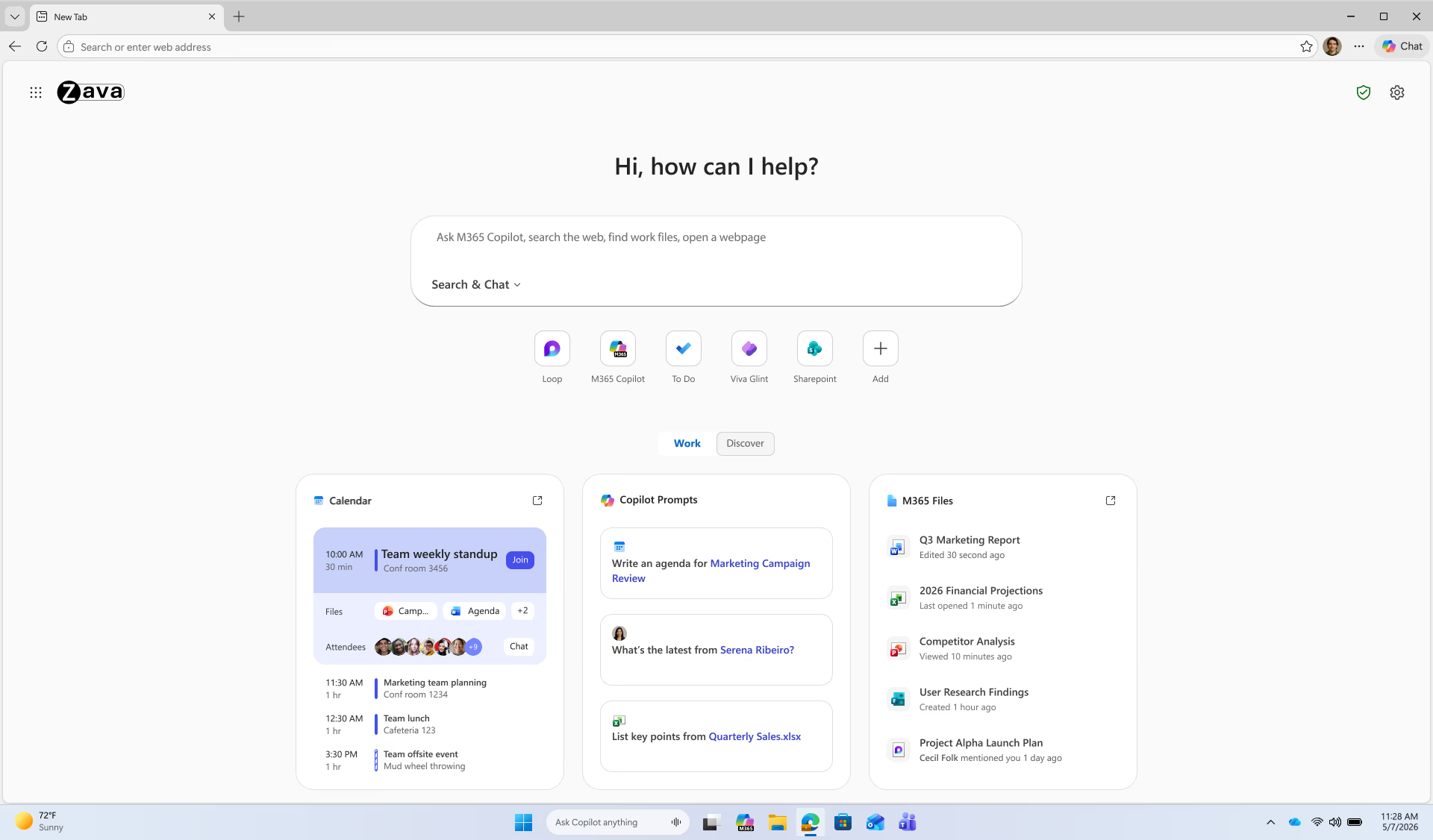
Copilot new tab page
In preview
One place to search, chat, and get things done
The Copilot new tab page brings together search, AI chat, your calendar, and recent files in one single view. Work cards surface what matters first—upcoming meetings, open files, and suggested prompts based on your work.
Work with peace of mind—when signed in with your work account, your data stays protected and in the tenant.
*Microsoft 365 Copilot license is required.
Multi-tab reasoning
Get answers across your tabs
Quickly understand and act on information spread across multiple pages—without jumping between tabs. Copilot can analyze content across many open tabs at once, combining insights to answer questions, compare information, and surface key takeaways in one place.
YouTube videos
Summarize YouTube videos
Turn any YouTube video into instant insights. With Copilot in Edge, get a quick summary, key takeaways and answers to your questions so you can get exactly what you need in seconds.
browse-with-copilot-preview
Your web, your control
Copilot in Edge works with you, on your terms. Work with peace of mind knowing you stay in control.
Control your experience
Choose which features to use, and switch them on or off whenever you want. You and your IT admin are always in control of your experience.
Manage with ease
Update permissions, clear history, and adjust settings in just a few steps. Control how Copilot works, all in one place.
Data protection
Enterprise-grade safeguards keep your organization's data protected at every step—backed by built-in security, privacy controls and compliance you can trust.
gradient
mobile
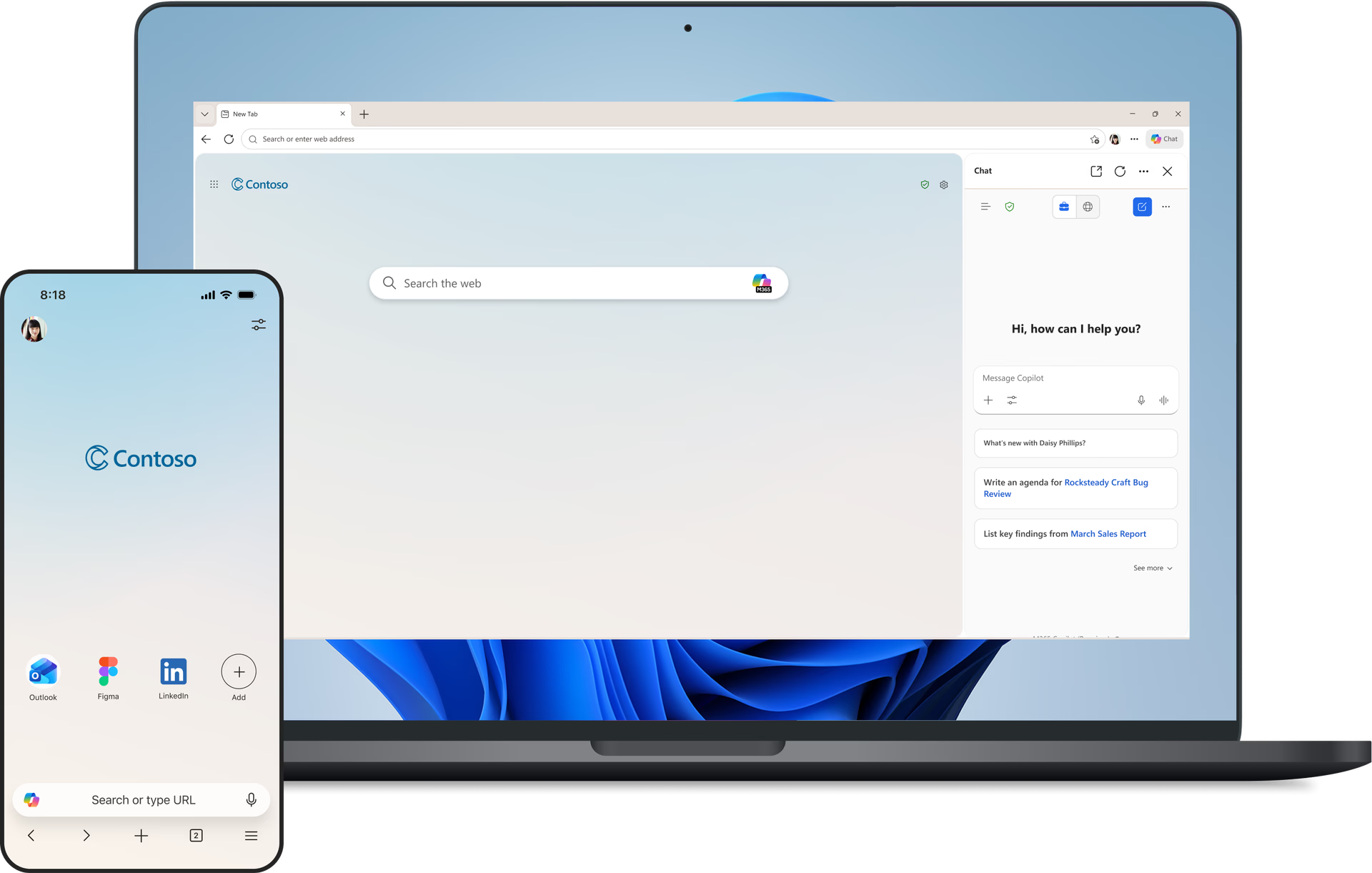
Work securely, wherever you go
Security and work‑ready features are built right into Edge on your phone.
Scan to get the Edge mobile app:
faqs
header
Frequently Asked Questions
get-the-most-out-of-copilot
Get the most out of Copilot
Get the most out of Copilot
Microsoft Copilot is an AI-powered digital assistant designed to engage in conversations and help people with a range of tasks and activities on their devices. Copilot can answer questions, create images or drafts of written content, suggest different ways to word things you've written, and much more.
Copilot is like having a research assistant, personal planner, and creative partner at your side. With Copilot you can:
- Ask a question, explore a curiosity, or practice a conversation. When you ask complex questions, Copilot gives you detailed replies. Feel free to ask follow-ups, such as “can you explain that more simply?” or “please give me more options.”
- Get a real answer. Copilot looks at search results across the web to offer you a summarized response and links to its sources.
- Be creative. When you need inspiration, Copilot can help you write poems, stories, or even create a brand-new image. Copilot works best when you’re more descriptive, so get creative and add details like adjectives, locations, or even artistic styles such as ‘digital art’ and ‘photorealistic.’
Each conversation with Copilot will have a limited number of interactions to keep the conversation interesting, relevant, and grounded in search.
Talking to Copilot should feel natural. Type text or speak with your voice — whatever works best for the conversation. Copilot will automatically recognize the language you are using and respond accordingly. You can ask Copilot to speak in another language as well, but it is optimized for English.
As you’re interacting, Copilot can:
- Search the web in a way that feels natural to how you talk, text, or think. Get a single, summarized answer with a consolidated set of links, or a detailed response and sources for more complex questions.
- Ask follow-up questions to your initial question or search to get more helpful replies.
- Rephrase the response and make things easier to understand. Just say something like, “Can you explain that more simply?”
- Respond with different formats like a table or numbered list when you ask for it.
- Help you write poems, stories, speeches, or share ideas for a project.
When you engage Copilot via voice, Microsoft stores voice data in accordance with our data retention policy. Microsoft uses voice conversations and other interactions with Copilot to provide and improve the service as outlined by the Microsoft Privacy Statement. As announced in August, we are also providing our customers with advance notice of training our generative AI models in Copilot on this data, and are providing a clear and easy way to opt out of such training. We are rolling this out gradually to ensure we comply with privacy laws around the world, and are not training on consumer data from the UK, the European Economic Area (EEA), and certain other countries at this time.
You can access Microsoft Copilot at https://copilot.microsoft.com/, Microsoft Copilot Android and iOS apps, Copilot in Windows app, or via Edge by clicking the Copilot icon on the top right. To learn tips for using Copilot in Edge and other AI features in the browser, visit AI tips page.
Visual Search allows you to upload images to Copilot and ask questions about them. For example, you can ask questions about images that are difficult to describe, get a recipe for a dish you don’t know the name of, identify a dog breed you don’t recognize, and much more. To use Visual Search, click on the camera icon in the input bar in Copilot, upload a picture from your device or provide a website link, and ask away.
tell-me-about-responsible-ai
Tell me about Responsible AI
Tell me about Responsible AI
Copilot searches for relevant content across the web and then summarizes the information it finds to generate a helpful response. It also cites its sources, so you’re able to see links to the content it references.
At Microsoft, we take our commitment to responsible AI seriously. Copilot is developed in accordance with our AI principles. We are working with our partner OpenAI to deliver an experience that encourages responsible use, and foundational model work. We've designed the Copilot user experience to keep humans at the center and developed a safety system designed to mitigate failures and avoid misuse with things like content filtering, operational monitoring, abuse detection, and other safeguards. Responsible AI is a journey, and we are continually improving our systems along the way. To learn more about how to use Copilot responsibly, please review our Terms of Use and Code of Conduct.
While Copilot works to avoid sharing unexpected offensive content in search results and has taken steps to prevent Copilot features from engaging with potentially harmful topics, you may still see unexpected results. We’re constantly working to improve our technology to prevent harmful content.
If you encounter harmful or inappropriate content, please provide feedback or report a concern to Copilot by clicking the ‘give feedback’ button in settings or use the flag icon below each response on mobile and the Copilot web page. On the Copilot app, you can long press the response and select “Report.” We will continue to work with people’s feedback to provide a safe search experience.
Copilot aims to respond with reliable sources, but AI can make mistakes, and third-party content on the internet may not always be accurate or reliable. Copilot may misrepresent the information it finds, and you may see responses that sound convincing but are incomplete, inaccurate, or inappropriate. Use your judgment and double check facts before making decisions or taking action based on Copilot’s responses. Reviewing Copilot’s citations is a good place to start checking for accuracy.
To share site feedback or report a concern, select the ‘give feedback’ button in settings or use the flag icon below each response on mobile and the Copilot web page. On the Copilot app, you can also long press the response and select “Report.” We will continue working with people’s feedback to provide a safe search experience for all.
learn-more-about-chat-history
Learn more about chat history
Learn more about chat history
Yes, if you are signed in, the conversations you have with Copilot are saved; We call this “Chat history”. You can view and access each conversation you previously had with Copilot. For example, if you ask Copilot for information about the first person to walk on the moon, the conversation you have will be saved in chat history, which you can return to at any time. By default, we store chat history data for 18 months from the last update to the conversation. You can access and delete your chat history by visiting Home and selecting the time machine icon.
There are two settings available in Copilot Settings to control Copilot data:
- You can turn off AI’s ability to use your data to train models. To do this, go to Sign-in > Settings > Account > Privacy >Model training. You can also go to Privacy > Export/Delete, to delete chat history from account.microsoft.com. Please note, if you are in the European Economic Area (EEA), the UK, and certain other countries Copilot is not using your data to train models currently.
- You can turn off personalization. If you use this setting, you will still have access to chat history and all future chats are saved, but Copilot experiences are not personalized. If you choose to enable the experience, Copilot also uses Bing search history and expressed interest from MSN to create more personalized, fluid conversations. For users in the EEA, the UK, and a limited number of other countries, we are evaluating options before offering this level of personalization for those users. Where offered, Copilot will notify users and provide them with a clear and easy way to opt-out of personalization.
To delete your Copilot chat history, from Settings go to Account > Privacy > Export or delete history, to delete your history from your Microsoft Privacy Dashboard. In addition, in your Microsoft Privacy Dashboard click ‘Browsing and search’ and scroll down to the Search history section. In the search box search for and delete all instances that include “Microsoft Copilot”.
If you are wanting to delete chats from Copilot before 10/01/2004 (legacy experience), in your Microsoft Privacy Dashboard click ‘Browsing and search’, scroll down to the Copilot activity history section and click ‘Clear all Copilot activity history and search history’.
Yes, we keep some of your chat history including prompts, to provide and improve the service. Your prompts are maintained in accordance with our Privacy Statement and used to monitor performance, troubleshoot problems, diagnose bugs, prevent abuse, and other product performance analytics necessary to provide and improve Copilot. Only the data visible in chat history in product is used for personalized answers.
To understand more about Microsoft Privacy Practices, review the Microsoft Privacy Statement and our privacy center.
personalize-your-copilot-experience
Personalize your Copilot experience
Personalize your Copilot experience
If you turn on personalization, we will use your recent conversations and Microsoft activities to personalize your experience. Your Microsoft activities may, depending on your privacy settings, include your Bing search activities, MSN activities, and inferred interests. If you do not want us to personalize using a specific conversation from your chat history, search history or inferred interests, you can delete them on the Microsoft Privacy Dashboard. You can turn off personalization at any time by clicking your account icon at top right corner of the page > account > privacy > personalization. On Edge, you can turn off by clicking on “...”: from Copilot setting menu > permissions and privacy > personalization.
Allowing Copilot personalization means you’re letting Microsoft use your recent conversations and Microsoft activities including your Bing search and MSN activities to make Copilot more personalized for you. Copilot remembers your history and may make inferences from that history about your interests, hobbies, etc., to provide personalized experiences. However, as a Copilot user, you are able to delete all chat messages.
No. The Copilot personalization toggle (available on all Copilot surfaces), controls whether recent conversations and your Microsoft activities are used for personalization. The Edge personalization and advertising toggle controls whether Edge browsing activities can be used across Microsoft surfaces for personalization including Copilot.
You control which chats are used to personalize your experience. If you don’t want Copilot to personalize using your chat history, you can clear Copilot activity history on Microsoft Privacy Dashboard. Once deleted, the chats will not be used to personalize experiences.
Personalization is on by default except for those in the European Economic Area (EEA), the UK, and certain other countries. Users have the option to opt out of the experience. In your conversations, you will be notified whether your experiences are personalized or not. We will display a notice like " Copilot can learn about your interests and personalize your experience.” if personalized experience is allowed. A notice such as “Conversations are used to train AI and Copilot can learn about your interests.” will be displayed when both training and personalization is allowed. Depending on your region, personalization may be available by default. Personalization is not available for unauthenticated users.
We’re following our Responsible AI practices and rolling out this feature slowly; as a result, the feature may not yet be available in the European Economic Area (EEA), the UK, and certain other countries.
You can turn off personalization through the personalization setting in Copilot’s settings menu.
If you change your personalization consent from “yes” to “no,” we will only stop providing a personalized Copilot experience. We will keep your chat history so you can still view your past conversations. However, your future Copilot experience will no longer be personalized.
Yes, you can turn off personalization within Copilot settings at any time. Turning off personalization won’t delete your chat history.
Regardless of your user settings, Copilot is designed not to personalize interactions based on some topics to protect your privacy and to prevent the use of potentially sensitive information. For example, we take steps to exclude context from your past conversations that may be considered sensitive, even if chat history and personalization are turned on in your settings. Users should use caution when sharing information they consider to be sensitive with Copilot.
review-data-use-and-control-options
Review data use and control options
Review data use and control options
Generative AI refers to a category of AI models that analyze data, find patterns and use these patterns to generate or create a new output, such as text, photo, video, code, data, and more. “Training” an AI model means providing it with data to help it learn to make predictions or decisions. Training is a broad concept that includes many different activities to help models learn pre-training a generative AI model, fine tuning a model, or training a classifier or filter to help models provide more appropriate results.
These models use patterns and correlations learned from their training data to predict what comes next in a sequence. They are tuned to learn general relationships in language, not to memorize specific segments of training data. They do not store or have access to the original training data. Instead, generative AI models are designed to generate new expressive works and content. We also take additional steps to prevent these models from inadvertently reproducing their training data, such as conducting testing and building filters that screen out previously published or used material.
Microsoft uses publicly available data, mostly collected from industry-standard machine learning datasets and web crawls, like search engines. We exclude sources with paywalls, content that violates our policies, or sites that have opted-out of training using web controls that we published. On top of this, we do not train on data from domains listed in the Office of the United States Trade Representative (USTR) Notorious Markets for Counterfeiting and Piracy list.
We do not train on data from our commercial customers, or any data from users logged into an organizational M365/EntraID account. We also do not train on data from M365 personal or family subscriptions or on data from users who are not logged into their Microsoft Account.
Microsoft will begin to use consumer data for AI training in certain countries later this year. For users logged into a Microsoft account, you will be able to control whether your consumer data is used for training the generative AI models used in Copilot and other AI offerings from Microsoft through an opt-out control. Opting out will exclude your past, present, and future consumer data from being used for training these AI models, unless you choose to opt back in. This setting will be made available across web, desktop, and mobile versions of all in-scope consumer products over the coming months. You will also see in-product messages notifying you about a new user control, including on Bing, MSN, and Copilot.
We will limit the data we use for training. We will not train on data from our public sector or enterprise customers, unless they expressly opt-in, nor will we train on any data from M365 consumer offerings. Learn more here. We also will not train AI models on personal account data like your Microsoft account profile data or email contents. If any images are included in your AI conversations, we take steps to de-identify them such as removing metadata or other personal data and blurring images of faces.
Your personal interactions with our services like queries and responses are kept private and are not disclosed without your permission. You can adjust your personalization in settings.
We remove information that may identify you, like names, phone numbers, device or account identifiers, sensitive personal data, physical addresses, and email addresses, before training AI models.
Your data remains private when using our services. We will continue to evaluate our models and take steps to prevent models from reproducing user information or past conversations. We will protect your personal data as explained in the Microsoft Privacy Statement and in compliance with privacy laws around the world.
We do not use data from users under 18. We only train our generative AI models on data from MSA authenticated users 18 years or older. In addition, if you are in the European Economic Area (EEA), United Kingdom, and certain other countries listed below, your data is not being used to train AI models at this time.
Microsoft will begin to use data from Bing, MSN, Copilot, and interactions with ads on Microsoft for AI training later this year. This includes anonymous search and news data, interactions with ads, and voice and text conversation data with Copilot like prompts, queries, chats, responses, and other. This data will be used to improve Copilot and our other generative AI models to create a better user experience for you and others. These generative AI models may also be used to improve other Microsoft products and services. For users logged into their Microsoft account, you are able to control whether your consumer data is used for training generative AI models used in Copilot and other AI offerings from Microsoft through opt-out control.
By using real-world consumer data to help train our underlying generative AI models, we can improve Copilot in the future and offer a more personalized and relevant natural language experience. For example, our AI models can use these conversations to learn from human communication patterns, like understanding colloquial phrases or local references. The more diversity in conversations our AI models are exposed to, the better they will understand and serve important regional languages, geographies, cultural references, and trending topics of interest to users.
We also use Copilot conversations and other consumer data for digital safety, security, and compliance purposes as outlined in the Microsoft Privacy Statement.
Before we start training, we’ll also make it easy for people to opt out, if they wish, of having the data they share in these services used to train our generative AI models. We will provide opt-out controls starting in October. To give users ample time to consider their choice, we also won’t begin training AI models on this data until at least 15 days after providing these opt-out controls. At this time, we will not use consumer data to train models in the European Economic Area (EEA), the United Kingdom, and certain other countries listed below. We will roll this out to those regions gradually, in order to ensure we get this right for consumers and comply with local privacy laws around the world.
This opt-out setting will not exclude your data from being used for other general product or system improvements nor from use for advertising, digital safety, security, and compliance purposes as outlined in the Microsoft Privacy Statement.
Consumers who are 18 years or older and logged into their Microsoft (consumer) accounts will be offered the option to opt-out of AI training starting in October. This setting will not be available in the following markets in September: Austria, Belgium, Brazil, Bulgaria, Canada, China (including Hong Kong), Croatia, Cyprus, the Czech Republic, Denmark, Estonia, Finland, France, Germany, Greece, Hungary, Iceland, Ireland, Israel, Italy, Latvia, Liechtenstein, Lithuania, Luxembourg, Malta, the Netherlands, Norway, Nigeria, Poland, Portugal, Romania, Slovakia, Slovenia, South Korea, Spain, Sweden, Switzerland, the United Kingdom, and Vietnam. This includes the regions of Guadeloupe, French Guiana, Martinique, Mayotte, Reunion Island, Saint-Martin, Azores, Madeira, and the Canary Islands. This means that AI offerings will be available in those markets, but no user data will be used for generative AI model training in those locations until further notice.
No, nothing you say to Copilot will ever be made public. Copilot will not have direct access to your chat history or personal data during conversations with other users.
Yes, some Copilot conversations are subject to both automated and human review for both product improvement and digital safety purposes. For example, to build, train, and improve the accuracy of our automated methods of processing (including artificial intelligence or AI), we manually review some of the output produced by the automated methods against the underlying data. We include human feedback from AI trainers and employees in our training process. For example, human feedback that reinforces a quality output to a user’s prompt, improving the end user experience.
We may also review conversations flagged as a violation of the Code of Conduct in the Terms. Our Code of Conduct prohibits use of the Copilot service to create or share inappropriate content or material. Some conversations are reviewed when a violation of the Code of Conduct is suspected.
Limited human review is required as part of the investigation process when a violation of the Code of Conduct is suspected. To ensure that our services are safe and secure for everyone, a complete opt-out of human review is not available.
Yes, you can opt-out of AI training and still have personalization turned on. In this case, Copilot will remember recent conversations to give you a more personalized response, but Microsoft will not use your conversations and other Microsoft activities for generative AI model training. For example, Copilot will remember that you are a vegetarian when suggesting dinner recipes.
We will not share your data with third parties or partners for AI training purposes without your permission.
Your conversations with Copilot, like queries and responses, are not disclosed or sold to third parties, except for the following limited instances:
Microsoft shares some personal data with third parties in accordance with our Microsoft Privacy Statement. For example, we may share your personal data with Microsoft-controlled affiliates and subsidiaries, with vendors working on our behalf, and when required by law or to respond to legal process.
To improve Copilot’s safety and ability to detect risks, the Copilot team partners with external research organizations to review and evaluate Copilot logs. For example, external research organizations can help review Copilot conversation logs to understand the variety of queries used to seek extremist content, compare trends across the industry, and advise techniques for better finding and mitigating harm.
toggle
- * Feature availability and functionality may vary by device type, market, and browser version.