
The New Future of Work
The New Future of Work is a cross-company research initiative dedicated to creating solutions for a future of work that is meaningful, productive, and equitable. It began during the pandemic in response to an urgent need to understand remote work practices. When many people returned to the office, the focus shifted to supporting the hybrid work transition. Then in 2023, another generational shift in work occurred when language models made the leap from the lab into the real world, a shift that could make the changes to remote and hybrid work look small by comparison. In 2024, our focus shifted to defining and measuring the real-world impact of new generative AI tools on the workplace. Now in 2025 and beyond, we are looking at how AI can make all of us, collectively, better, by studying and building AI for communication, teams and learning.
The future of work with AI is not a foregone conclusion, and this initiative exists to not just study work with AI, but to help Microsoft build a new future of work with AI that empowers every person and every organization on the planet.
This site features research from the initiative as well as resources to help our customers and ourselves navigate a rapidly changing work environment and thrive in the age of AI. We recently published our 2025 Report (opens in new tab) that summarizes some of the exciting work in this space.
AI and the New Future of Work CFP | Spring 2026
Collaboration between people is a central mechanism in how work gets done, but AI doesn’t yet work as well for teams as it does for individuals. Understanding how humans and AI can work better together in group settings is a critical area of the AI frontier. In this year’s New Future of Work Call for Proposals, we’re looking to support research that advances this frontier.
AI Diffusion Report from the AI Economy Institute (AIEI)
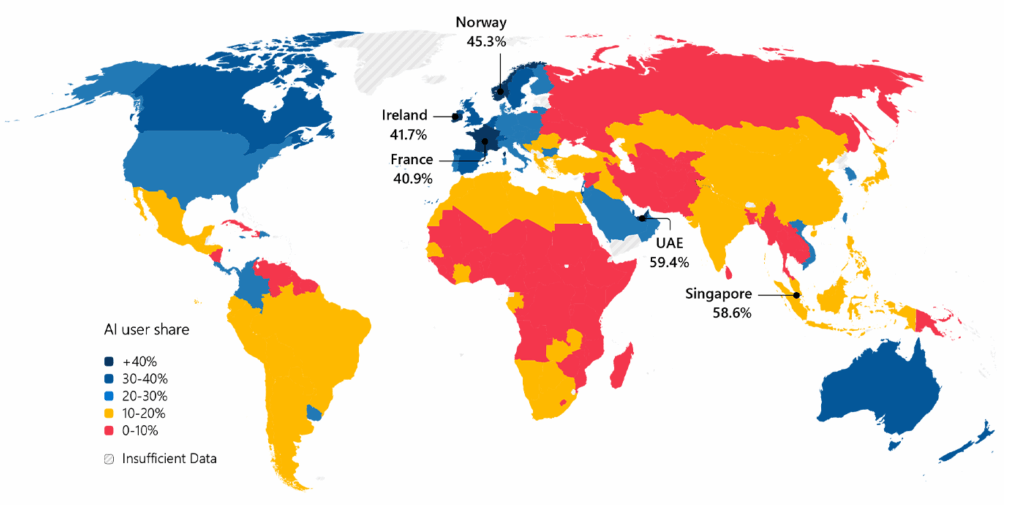
AI is the fastest-spreading technology in history—but not for everyone.
Explore the AI Economy Institute’s latest report on global adoption, the forces driving diffusion, and the barriers that could shape who benefits from AI for decades to come.
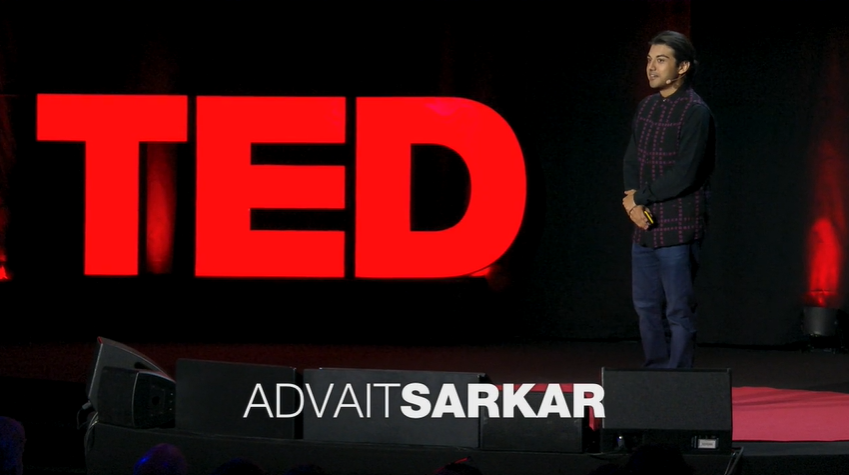
TED Talk by Advait Sarkar
Chatbots might help you get work done faster — but at what cost? When we outsource our reasoning to artificial intelligence, we reduce ourselves to “middle managers for our own thoughts,” says AI and design researcher Advait Sarkar. He examines the cognitive trade-offs of using AI at work and introduces a different kind of tool: one that encourages critical thinking, nudges reflection and actually helps you get smarter.

Education in the AI Economy: meet the 2025 cohort
The AI Economy Institute (AIEI) launched its second cohort of researchers, advancing its mission to understand and accelerate the responsible diffusion of artificial intelligence (AI) across economies, industries, and communities. This year’s theme—Education in the AI Economy—places diffusion at the heart of our inquiry: how does AI adoption spread in the classroom, how students and educators benefit, and how we can design a future where opportunity is intentionally distributed?

WorkLab
WorkLab is a Microsoft site that builds on the research here to deliver stories and science-based insights on how to connect more, create more, and unlock ingenuity. It includes pieces on performance in the age of AI and how generative AI will transform work.