
News Story
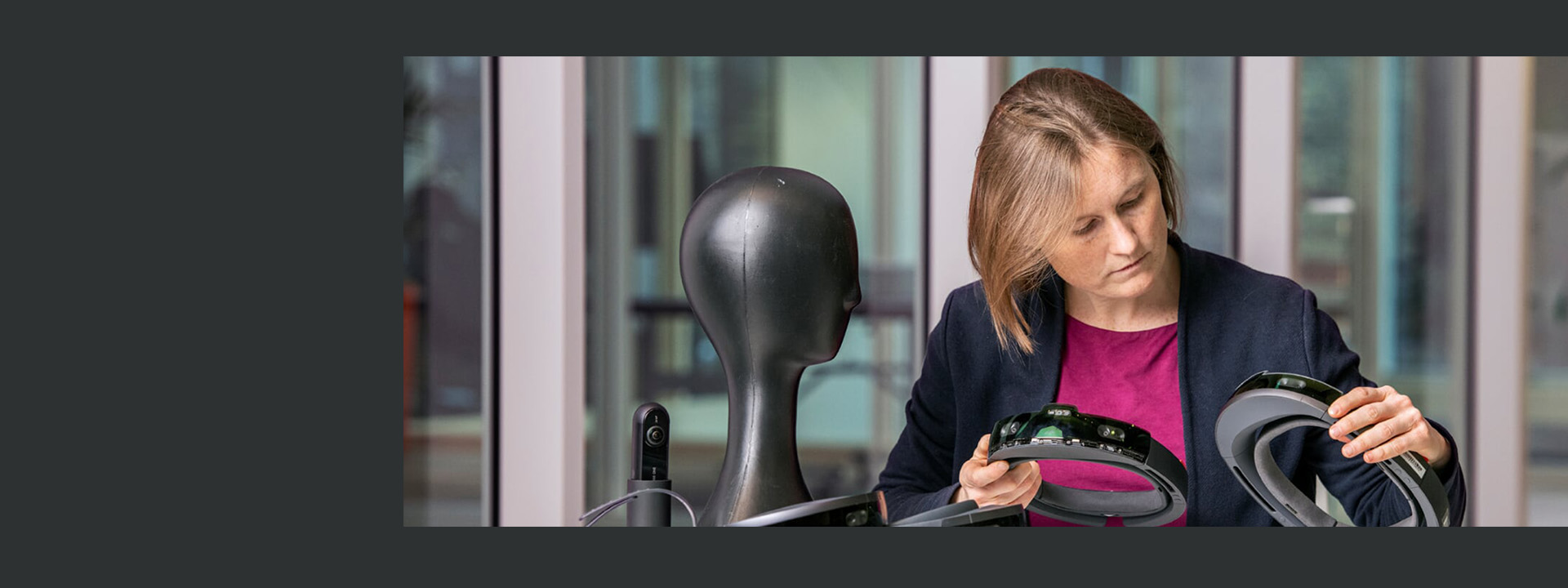
Microsoft teaches robots how to deal with groups and draw from memory
The research initiative has produced sensor-equipped robots that can not only recognize multiple people, but infer their objectives and roles.
Below please find an index of news and awards that recognize Microsoft researchers’ contribution to scientific research and commitment to advancing computer science.
The research initiative has produced sensor-equipped robots that can not only recognize multiple people, but infer their objectives and roles.
As part of its commitment to basic research, Microsoft invests in creating joint research centers around the world.
Eye Control makes Windows 10 more accessible by empowering people with disabilities to operate an onscreen mouse, keyboard, and text-to-speech experience using only their eyes. The experience requires a compatible eye tracker, like the Tobii…
A free add-in makes it easier for .NET developers to search for and reuse code samples from across the coding community.
Lauter compared the technique to ‘locking a gold brick in a safe with a pair of gloves attached to openings in the side. A jeweler could still use the gold to make jewelry without ever…
Cryptologists are perfecting a new privacy tool (homomorphic encryption) that turns genetic information into a secure yet functional format.
Microsoft is experimenting with AI in lifts and reception desks at its headquarters.
In October 2013, Microsoft teamed up with Seattle artists to create Gigapixel ArtZoom, an online panorama that shows off Seattle’s stunning vistas and vibrant art scene.
In Microsoft Research’s Mobility and Networking Research Group, senior researcher Ranveer Chandra has been co-leading the Networking Over White Spaces(KNOWS) project, which explores the use of spectral ‘white spaces.’
Microsoft has created an interactive billion pixel image of its Seattle base – and hidden a few surprises in there.