
Reflecting on another year that redefined work
What a year it’s been. As leaders, we’ve continued to navigate a test-and-learn approach for how, when, and where our teams work while learning how to serve our customers in a hybrid world.
 Microsoft AI

Across professional services, artificial intelligence is increasingly influencing how work is performed, how services are delivered, and how firms think about long‑term differentiation. For leaders in audit, tax, and advisory services, expectations are evolving. Clients are looking for greater efficiency, more consistent insight, and deeper expertise—while continuing to expect strong governance, security, and professional judgment.

What a year it’s been. As leaders, we’ve continued to navigate a test-and-learn approach for how, when, and where our teams work while learning how to serve our customers in a hybrid world.
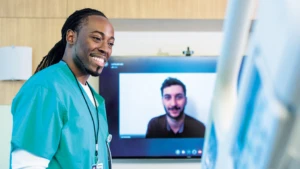
Our Microsoft U.S. Health and Life Sciences organization has collaborated with frontline health organizations and professionals over the course of the pandemic to better support patient needs and address emerging issues and opportunities.

Serena Sacks-Mandel | General Manager, US Education Customer Success K-12 educators devote their lives to ensuring every child has the opportunity to learn, grow, and achieve their best. However, their work has become more challenging in the past few years.
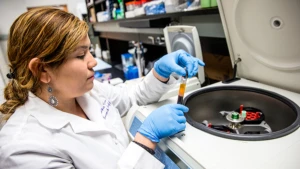
Supply chain disruptions have become commonplace: natural disasters, international trade tensions, cyberattacks, and global pandemics are just a few of the shocks that can immobilize pharma companies.
Like all businesses, commercial businesses should pursue sustainability strategies because they enable them to respond to rapidly growing market interests. It’s not just the right thing to do, it’s smart business. The future of our planet, our society, and our people depend on all of us being good stewards of our environment.

National security mission leaders need the latest tools to deliver on critical mission objectives. At a recent Microsoft Classified Mission Clouds event, I met with customers and partners across the national security community to understand their mission needs and explore how Microsoft capabilities can help them serve their missions and solve their most pressing challenges.

S. Craig Watkins is the Ernest A. Sharpe Centennial Professor at the University of Texas at Austin, an internationally recognized expert in media, founding director of the Institute for Media Innovation, and the Lead Principal Investigator for UT’s Good Systems Designing AI for Racial Justice research project.

Fostering U.S. economic growth and prosperity hinges on our collective ability to create a safer world. Microsoft CEO Satya Nadella recently met with President Biden, cabinet officials, educational institutions, and top executives from some of the largest tech, financial services, insurance, and energy companies to address the critical challenge of cybersecurity.
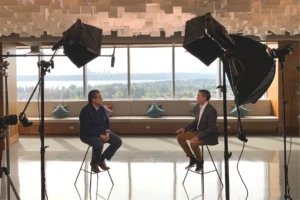
The challenges of the past year have reinforced the importance for CFOs and other finance leaders of small and medium-sized businesses (SMB) to balance business execution in the present while investing in capabilities for the future. Historically, finance has focused on strategies that protect value.

Our ongoing series on the Biden Administration’s Cybersecurity Executive Order (EO) has covered considerable ground to date — from demystifying the Zero Trust journey to providing strategies for securing critical software and classifying agency data — but there is still work to be done as we look ahead to the next wave of approaching milestones.

So far in our ongoing series on the Biden Administration’s Cybersecurity Executive Order (EO) to bolster the U.S. Government’s resilience against cyberattacks we’ve taken a look at what’s next for federal agencies and then mapped out major milestones.
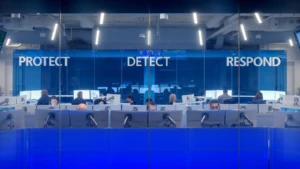
Cyber-attacks against state and local governments are increasing and accelerating – even before COVID, two-thirds of attacks targeted state and local organizations. From January to May of 2020, there was a 350% increase in phishing attempts, with attackers taking advantage of the fear and uncertainty driven by COVID.