

Project Catapult
News & features
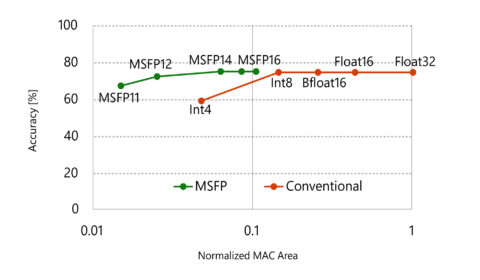
A Microsoft custom data type for efficient inference
| Bita Darvish Rouhani, Doug Burger, Eric Chung, Rangan Majumder, Sangeetha Shekar, Saurabh Tiwary, Sitaram Lanka, and Steve Reinhardt
AI is taking on an increasingly important role in many Microsoft products, such as Bing and Office 365. In some cases, it’s being used to power outward-facing features like semantic search in Microsoft Word or intelligent answers in Bing, and…
In the news | Inside HPC
FPGAs and the Road to Reprogrammable HPC
GPU acceleration or architectural specialization are not new concepts, but some experts predict they will become increasingly common to speed up performance and also lower energy costs of future systems.
In the news | Intel Newsroom
Intel FPGAs: Accelerating the Future
Project Brainwave is Microsoft’s principal architecture for serving real-time artificial intelligence (AI) that is used in Bing’s intelligent search, and now offered in Azure and at the edge.

Clouds, catapults and life after the end of Moore’s Law with Dr. Doug Burger
Episode 23, May 9, 2018 – Dr. Burger talks about how advances in AI and deep machine learning have placed new acceleration demands on current hardware and computer architecture, offers some observations about the demise of Moore’s Law, and shares…
In the news | The AI Blog
Real-time AI: Microsoft announces preview of Project Brainwave
Every day, thousands of gadgets and widgets whish down assembly lines run by the manufacturing solutions provider Jabil, on their way into the hands of customers. Along the way, an automated optical inspection system scans them for any signs of…
In the news | ZDNet
Microsoft Build goes gaga for AI: Azure Machine Learning and beyond
Machine learning algorithms are among those that FPGAs can turbo-charge. And that’s how an FPGA-based architecture for deployed ML models leads to a service called Azure Machine Learning Hardware Accelerated Models.
An initiative called Project Brainwave lets developers in Microsoft’s data centers use field-programmable gate arrays (FPGAs), which can be customized even after they’ve been plugged into servers.
In the news | ZDNet
I do so like AML and HAM